
Reverse Osmosis Water Filter Systems: What They Are, Why They Matter and How to Get One
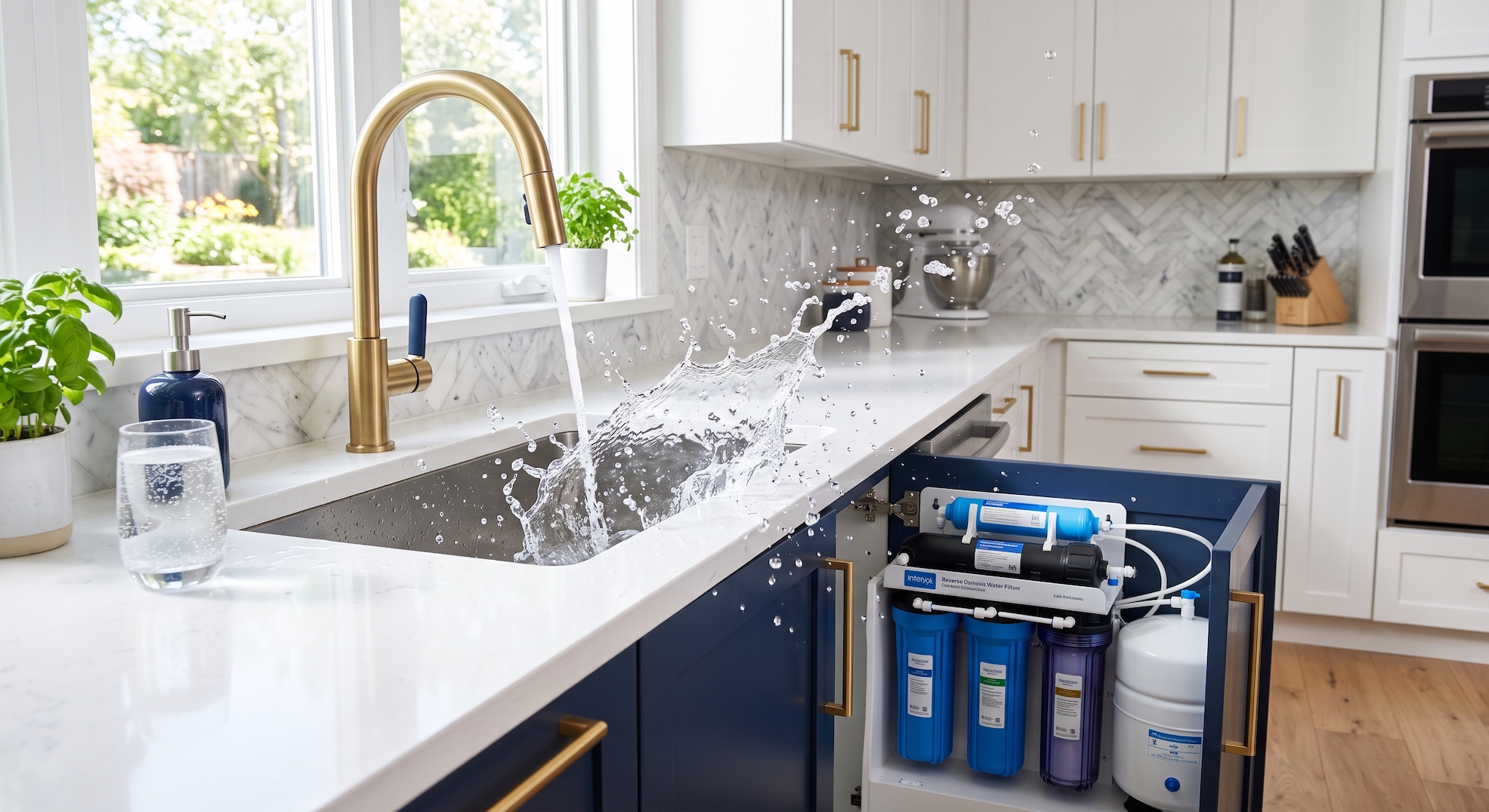
Tap water can taste of chlorine, carry traces of metals, or leave scale on your glasses. A reverse osmosis (RO) system is one of the most popular ways to fix all three at the faucet. Here’s a plain-language guide to what it is, why it matters and how to get one at home.
What Is Reverse Osmosis?
Reverse osmosis is a water purification method that pushes water through a semi-permeable membrane. Water molecules pass through, while dissolved salts, metals, organic matter and many other impurities are left behind and flushed away.
How a Home RO System Works
- Pre-filters: Sediment and carbon filters remove dirt and chlorine, protecting the membrane.
- RO membrane: The main stage that removes most dissolved contaminants.
- Storage tank: Holds the treated water so it’s ready on demand.
- Post-filter: A final polishing stage before the water reaches your faucet.
Some systems add a remineralization stage that puts healthy minerals back for better taste.
Why a Reverse Osmosis System Is Important
- Cleaner drinking water: RO reduces many contaminants, such as lead, arsenic and dissolved solids. Look for certified systems and check which contaminants each is tested for.
- Better taste and smell: Removing chlorine and dissolved solids makes water, coffee and tea taste fresher.
- Cooking and ice: Cleaner water means clearer ice and better-tasting soups and drinks.
- Convenience: It replaces bottled water and the trips to buy it.
Popular Under-Sink Models Compared
| Feature | APEC ROES-50 | iSpring RCC7AK |
|---|---|---|
| Daily Capacity | 50 gallons per day | 75 gallons per day |
| Remineralization Stage | No | Yes (alkaline stage) |
| Installation | DIY-friendly | DIY-friendly, top-mounted faucet design |
| Typical Price | About $229 | About $199 |
Prices change often, so confirm before buying.
How to Get a Reverse Osmosis System
- Test your water: A home test kit or your utility’s water report shows what you need to remove.
- Choose a type: Under-sink systems are the most common. Countertop units need no plumbing.
- Check certifications: Look for independent third-party certification.
- Buy and install: Many systems are DIY-friendly and take a couple of hours.
- Maintain it: Replace pre-filters about every 6 to 12 months and the membrane every 2 to 3 years.
What Does It Cost?
Under-sink systems typically cost between about $200 and $950 installed. DIY installation can bring the cost down to the price of the unit, while professional installation can add a few hundred dollars.
Things to Keep in Mind
- RO systems send some water to the drain as part of the process.
- You need space under the sink for the unit and tank.
- Filters need regular changing to keep performance up.
Bottom Line
A reverse osmosis system is a practical upgrade if you want cleaner, better-tasting water at home. Start by testing your water, choose a certified system and plan for filter changes.

Leave a Reply